
From Packets to Pulses
Bridging Cyber Operations and Electronic Warfare


Imagine an invisible force, you can’t see it, touch it, or smell it. It’s everywhere - an invisible space that carries radio signals, radar, GPS, Wi-Fi, and more. The electromagnetic spectrum is that space and its battlefield most people will never see. If traditional warfare is a fistfight, electronic warfare is messing with your opponent’s senses before the punch is even thrown. It’s cutting the lights, blaring noise in their ears, feeding them false directions, and making them question what’s real. This is done all without physically engaging your opponent.
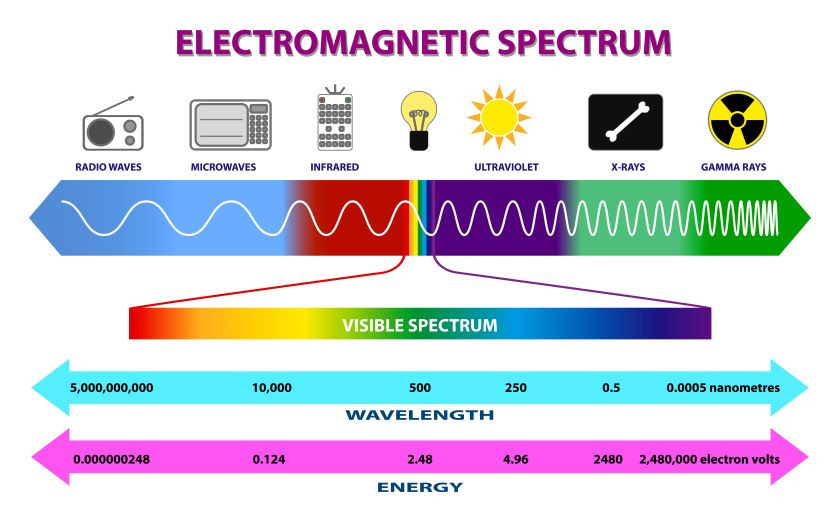
To better understand this let’s take a look at some science fiction examples. In Star Wars, space battles are not just ships firing lasers! They jam sensors, scramble targeting systems, and disrupt scanners to become “invisible”. Battlestar Galactica gives us a more modern concept of Electronic Warfare. The Cylons don’t just attack physically; they first exploit networks, disable systems, and turn technology against its users. The blend of cyber and electronic warfare is exactly where modern conflict is headed. Systems fail not because they’re destroyed, but because they’ve been compromised or deceived.
“War never changes, only weapons are new” - 1914, unknown French waiter
I was fortunate in my military career to attend Electronic Warfare School at Fort Sill, Oklahoma. For the Army electronic warfare was still fairly new and was under Fires (weapon systems that create a specific lethal or nonlethal effect on a target). Later, the Army decided to move electronic warfare under the 17 series MOS to include placing EW under fifth domain operations - information.
At its core, EW revolves around controlling the electromagnetic spectrum. Think of the spectrum as a crowded highway system, every military unit depends on it to move information. Electronic warfare is what happens when someone starts blocking lanes, creating fake road signs, or hijacking traffic altogether.
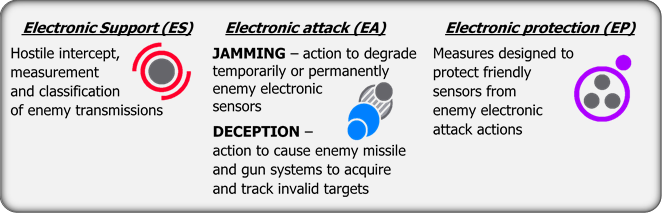
Electronic warfare has three main areas of focus:
Electronic Attack (EA) is the disruption phase. Imagine trying to have a conversation while someone blasts static into your headphones. That’s jamming. Systems that rely on radar or communication signals suddenly go deaf or blind. Missiles lose their targets. Drones lose their operators. Units lose coordination.
Electronic Protection (EP) is the defensive side. If someone is trying to jam your signals, you adapt—like switching to a secure channel, lowering your signal signature, or using smarter, harder-to-interfere-with tech. It’s like speaking in code in a noisy room so only your intended listener understands.
Electronic Support (ES) is the awareness layer. This is where you listen carefully to the environment—detecting signals, identifying threats, and mapping out who’s emitting what. Think of it as eavesdropping on the battlefield’s “background chatter” to understand who’s nearby and what they’re doing.
In the EW domain, offense and defense blur together. The same system that protects your signals might be used to deceive someone else. This is what makes electronic warfare especially fascinating. It’s a battle of intellect as much as technology. There’s no explosion when a radar is spoofed, but the consequences can be just as decisive.
So what’s the big deal? As an EWO, you are taught the science behind the electromagnetic spectrum, the mechanics behind GPS satellite communication, the communication protocols and frequencies of cellular devices. That was our crawl phase; then it was time to sprint into GPS spoofing, jamming radios, signal triangulation, capturing information out of the airways, and much more. To be clear, the capabilities of Electronic Warfare is highly classified and this article will be strictly unclassified, publicly available information.
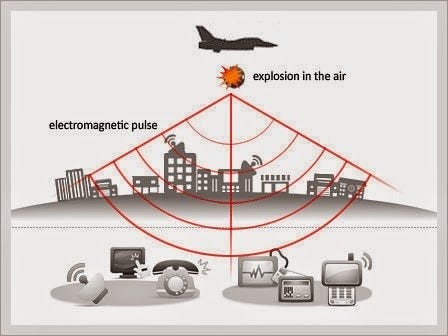
Has Electronic Warfare been used in modern warfare? Yes, the first documented use of EW operations was pre-invasion of Ukraine by the Russian Federation Forces in 2014. Russian forces sent special forces operators and psychological warfare personnel into Ukraine as a plain clothes clandestine operation. The mission had several operational objectives - conduct EMS analysis, identify Russian sympathizers, disrupt organization via cyber warfare operations, and create unrest. Needless to say, the mission was successful and that should be terrifying. Parts of Ukraine was already lost by the time the main Russian forces had boots on ground, all without firing a single shot or launching a missile strike.
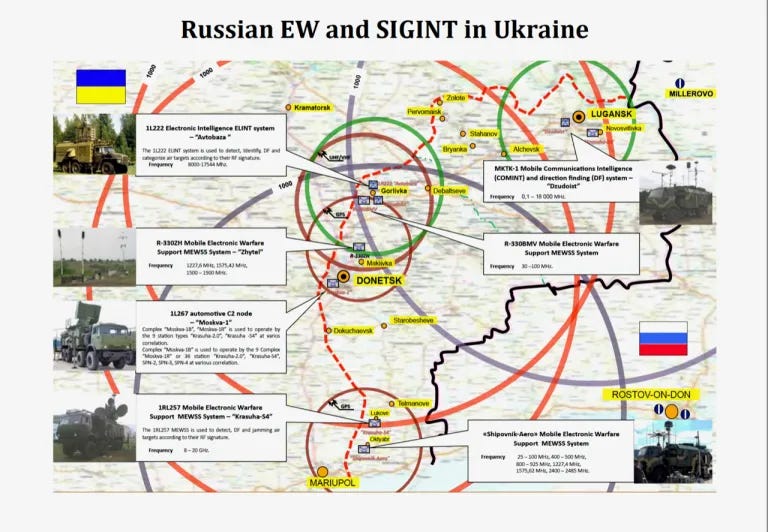
Russian deployment of electronic warfare systems in the Donbas in 2016. (Courtesy of Phillip Karber.)
Now has does this relate to anything in the real world or cyber security in general? Simply put, it relates to everything. Your cellphone, home router, a Wi-Fi access point, even your smart vehicles are all attack vectors to common electronic warfare tactics. If it transmits a frequency you can “hack” it.
As a short example lets take a garage door opener. A simple transmitter (the transportable device) and receiver (garage door mechanism) is a one way operation that is a short wave radio frequency. All I need is a spectrum analyzer to capture the signal at the time you open your garage door and boom, I have access to your home. I can use the analyzer to play back the exact frequency to your specific garage door. The same can be done with vehicle key fobs or RFID technology and there’s nothing you can do about it.
To open your eyes further, airliners use ground radar and GPS to transmit/receive flight paths, air point locations, and radar of other aircraft in the sky. It’s been proving you could theoretically disrupt an aircraft’s GPS and ground radar system to spoof a location causing the aircraft to land where they thought was its original destination. Even cell phone traffic can be captured and decrypted such as phone calls and text messages being sent in real-time. Fun fact - all major cell phone providers use their own encryption keys but the strength of those keys are largely contested.
Now those who are technical are thinking what about air-gap systems? Those are vulnerable too as of late 2024 from a published research paper by Dr. Mordechai Guri, the head of the Offensive Cyber Research Lab in the Department of Software and Information Systems Engineering at the Ben Gurion University of the Negev in Israel. RAMBO (Radiation of Air-gapped Memory Bus for Offense) is a novel side-channel attack leveraging radio signals emanated by a device’s random access memory (RAM) as a data exfiltration mechanism. The same lab has also demonstrated “AirKeyLogger” which is a hardware less radio frequency key-logging attack that weaponizes radio emissions from a computer’s power supply and exfiltrate’s real-time keystroke data to a remote attacker.
The common threat is this: the fight isn’t just about weapons - its about information dominance. Electronic warfare is what happens when you turn the battlefield into a contest of perception, where seeing clearly is more valuable than shooting accurately. Science fiction dramatizes it with glowing screens and dramatic shutdowns. Reality is quieter but arguably more unsettling. Systems don’t explode, they just start lying.
References:
“House of Commons - Ukraine: A Wake-up Call - International Relations and Defence Committee.” Parliament.uk, 2023, publications.parliament.uk/pa/ld5901/ldselect/ldintrel/10/1008.htm.
The Hacker News. “New RAMBO Attack Uses RAM Radio Signals to Steal Data from Air-Gapped Networks.” The Hacker News, 9 Sept. 2024, thehackernews.com/2024/09/new-rambo-attack-uses-ram-radio-signals.html.
The World’s Work Second War Manual : The Conduct of the War. Garden City, Doubleday, Page & Co, 1914.
Von Spreckelsen, Malte. “Electronic Warfare – the Forgotten Discipline - Joint Air Power Competence Centre.” Joint Air Power Competence Centre, 2 Dec. 2018, www.japcc.org/articles/electronic-warfare-the-forgotten-discipline/.